Artists from the Being/Seen exhibition share powerful reflections on diaspora, art, and the enduring legacy of sculptor John Rhoden.
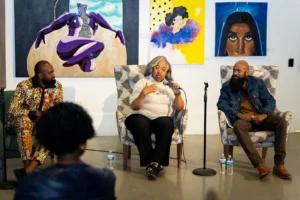
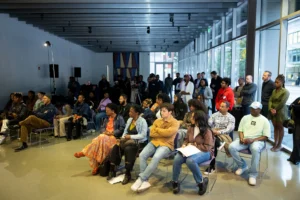
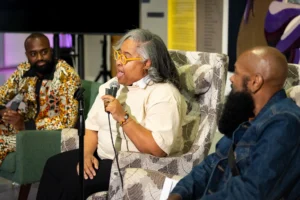
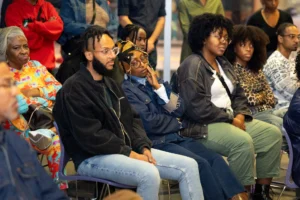
On Wednesday, October 15, the August Wilson African American Cultural Center (AWAACC) in Pittsburgh’s Cultural District hosted Global Black Identity and Artistic Expression, a powerful conversation inspired by the acclaimed exhibition Determined to Be: The Sculpture of John Rhoden.
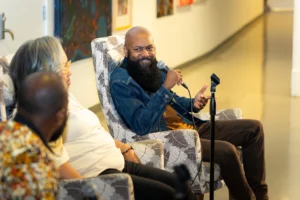
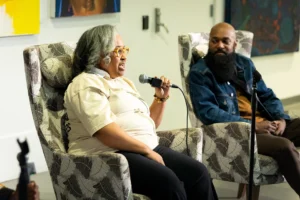
Moderated by Quincy Swatson, Founder and Owner of The Kofi Collection, the discussion brought together artists Charles Lyons and Tamara Howard to reflect on Blackness as a global experience—echoing the same spirit of cross-cultural exploration that defined John Rhoden’s groundbreaking career.
Inspired by John Rhoden’s Global Vision
As a sculptor who traveled the world and drew inspiration from Africa, Europe, and Asia, John Rhoden embodied the idea that art transcends borders while remaining deeply rooted in heritage. His exhibition, Determined to Be, served as the creative anchor for this conversation—prompting panelists to examine how diaspora, migration, and cultural exchange shape their own artistic practices.
Through open dialogue, the artists explored how global Black narratives influence creative expression, and how these stories, much like Rhoden’s sculptures, are infused with both cultural specificity and universal resonance. The conversation highlighted how artists continue to define identity and legacy through a shared commitment to community, resilience, and self-determination.
Generous support provided by Art Bridges.
Meet the Panelists
Charles Lyons
Charles Lyons is a visual artist living and working in The Hill District community of Pittsburgh PA. His work is a direct influence and representation of the community in which he lives. Inspired by the Hill District (past & present), his purpose in art is to allow his audience to see themselves or someone they know in his art.
Website: linktr.ee/artbyc.lyons | Instagram: @artbyc.lyons
Tamara Howard
My journey began in 1996, inspired by the colorful stories passed down about my great-grandmother, Maggie V. Folk McClellan. I’m honored to own three of her quilts today, each a testament to her artistry and resilience. Her modern, intuitive style warmed my grandmother, my mother, and now me—three generations touched by her hands and creativity. Her legacy deeply influences my own quilting practice, connecting me to Appalachian and Southern African American traditions where storytelling, resourcefulness, and familial care are stitched into every block. This connection sparked a deep curiosity in me. Though I didn’t have access to a sewing machine at the time, I took a few classes to get started, then taught myself patchwork techniques, color theory, quilt layout, and design—gradually building my skills and deepening my understanding of this tradition. Today, quilting is central to both my personal life and my community work. As the founder of The Quilt Empowerment Project, I merge this traditional art form with my background in engineering to offer structured, creative, and culturally responsive quilting education. Quilting is a daily practice that allows me to express myself, connect with others, and preserve cultural memory through fabric and thread. In my community, it serves as a tool for healing, storytelling, and intergenerational connection—honoring the past while inspiring new traditions. In my own work, I often incorporate African fabrics, historic block patterns, and symbolic color choices that reflect family history and ancestral narratives. Each quilt becomes a visual archive—preserving cultural memories that might otherwise be forgotten.
Website: folkquilts.com | Instagram: @folkquilts